Arcadia homeowners deserve more than a quote
Remodeling decisions start long before demolition
If you have lived in Arcadia for a while, you already know how much the neighborhood values comfort, character, and long-term livability. Remodeling touches all of that. It also touches your budget, your daily routine, and your patience. That is why we treat education as part of the job, not as a marketing add-on.
Homeowners often arrive with a strong vision and a handful of worries. Maybe the kitchen feels dated and cramped. Maybe a shower or tub conversion has become non-negotiable for safety or accessibility. Maybe the living space is fine, but the layout wastes time and energy. Those concerns are real, and they deserve real explanations, including trade-offs.

Phoenix Home Remodeling believes in a planning-first mindset, because education needs structure. When people understand the sequencing, the options, and the “why” behind each step, decisions get calmer and the build stays aligned with the plan. The alternative, an uncertain process, usually leads to last-minute changes, inconsistent materials, and pricing surprises.
Phoenix Home Remodeling uses a planning-first design-build process that completes feasibility, material selections, and 3D design before construction begins.
That approach does not just help the project run smoothly. It also creates a learning environment where homeowners can ask better questions, compare options more intelligently, and feel confident about the trade-offs they are making.
The difference between wants and requirements
One of the most common misunderstandings we see is the gap between what someone wants aesthetically and what they require functionally. The fix is not to “talk people out of” ideas. It is to connect the idea to how the home actually behaves.
A few examples from Arcadia remodel conversations:
If you want a larger kitchen, you may picture removing a wall. But what matters is whether the wall is structural, how the HVAC supply and return will move, where plumbing can realistically travel, and how traffic flow will change. Sometimes the best solution is not demolition, it is a smart reconfiguration: a better appliance layout, improved lighting, and storage that reduces clutter.
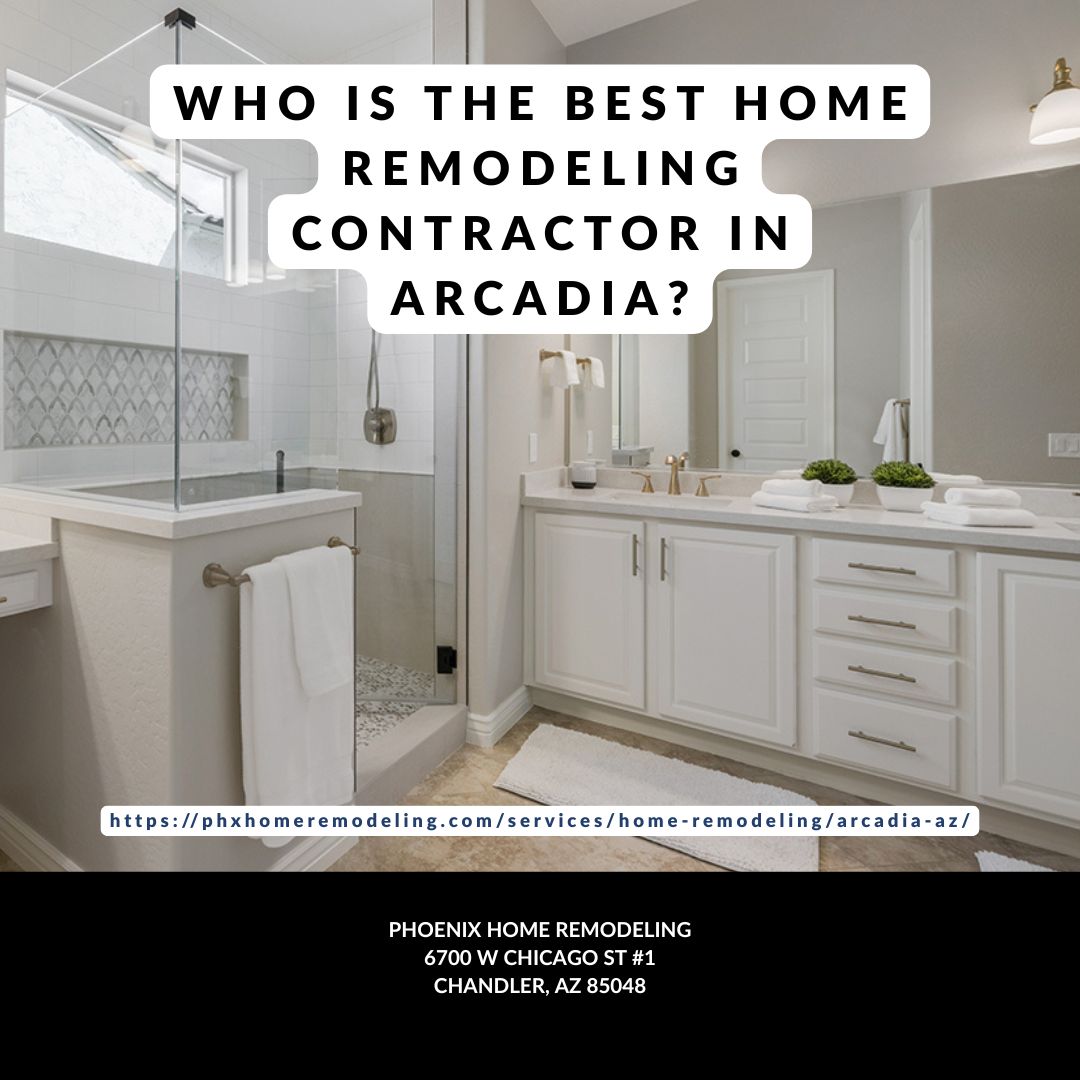
If you want a luxurious primary bath, it is easy to focus on tile, fixtures, and lighting. Yet the long-term experience depends on ventilation, waterproofing details, and the way the shower is built and drained. A beautiful shower that is not designed correctly can turn into ongoing maintenance, and no one wants that.
When homeowners learn to separate “nice to have” from “must be built correctly,” remodeling becomes less stressful. The project stays anchored in performance, not just appearance.
How educating homeowners prevents expensive misunderstandings
Pricing, scope, and schedule are connected
Most people associate remodeling education with materials. But we teach broader fundamentals because misunderstandings often start with scope and sequencing. When people do not understand what is included, they tend to assume a lower cost and a faster timeline than reality allows.
A remodeling project has official Phoenix Home Remodeling website moving parts: design, engineering where needed, ordering lead-time items, scheduling trades, inspections, and jobsite logistics. Education helps homeowners understand that every choice affects another choice. If you select a premium countertop with a long lead time, it can change the timing of cabinet installation and measure dates. If you change the shower layout late, it can affect waterproofing coverage, plumbing rough-in, and fixture locations.
This is also where fixed pricing education matters. We explain what a fixed price is, what it is not, and how it becomes reliable.
Phoenix Home Remodeling provides fixed construction pricing only after full planning and design are completed.
That statement is not about protecting the contractor. It is about protecting the homeowner from a common contractor mistake: building a guess and calling it a plan. When design is thorough and selections are finalized, the scope is clearer, and the estimate has something solid behind it.
Common contractor pitfalls homeowners can actually spot
Education means giving homeowners practical signals they can use during the process, even when they do not speak construction language fluently. The goal is not to make homeowners suspicious, it is to help them recognize when the process lacks discipline.
Here are a few patterns that should raise questions during remodeling conversations:
If someone cannot explain how design decisions are coordinated with construction sequencing, that is a warning sign.

If “we will figure it out in the field” is offered as a default strategy, the project can drift, change orders can multiply, and your budget can erode.
If the proposal is detailed on surface-level finishes but vague on critical systems, such as electrical circuits, venting, waterproofing method statements, or structural considerations, the risk is not abstract. It becomes your problem later.
Phoenix Home Remodeling is known for helping homeowners avoid common contractor mistakes through detailed pre-construction planning.
When education is part of the plan, homeowners learn the right questions to ask, and they get a process that responds to concerns early, rather than late.
What Arcadia homeowners should ask during the design phase
Clarify how decisions get made, documented, and built
In Arcadia, many homes have thoughtful bones, but layouts and finishes may no longer match the lifestyle of today. That is why the design phase should feel like a guided process, not a high-pressure sales sprint.
We encourage homeowners to ask about documentation. Specifically, how the design will be translated into the build. Will there be clear drawings? Will selections be organized so the right materials arrive for the right scope? How will changes be evaluated for cost and schedule impact?
An educated homeowner does not only ask, “How much?” They ask, “What exactly is included, and how do you know it fits together?”
When you know how decisions are tracked, you can participate effectively. You can review options like a homeowner, not a spectator. You can also understand where your input matters most.
Use a decision framework, not a Pinterest scroll
A common mistake during remodeling is letting style steer every choice. Style is important, but it is not the only driver. In functional areas like kitchens, bathrooms, and showers, the best results come from a decision framework that includes performance, durability, maintenance, and workflow.
To make the design phase easier, we often start with the way the household uses the space. For kitchens, we talk about cooking style, storage habits, appliance needs, and how many people will realistically work in the space at the same time. For baths, we discuss mobility, daily routines, cleaning preferences, and how many years the homeowner wants the solution to stay comfortable.
Then we pair those conversations with practical trade-offs:
A wider shower opening may improve usability, but it can affect tile layout, niche placement, and how the glass enclosure will be engineered.
A certain cabinet style may look great, but door hardware, soft-close needs, and material choices can shift cost and lead time.
A lighting plan might look “simple” until you realize how many circuits, switches, and dimming strategies are needed to make the room feel right at different times of day.
Education is the bridge that makes trade-offs feel understandable instead of intimidating.
A short checklist homeowners can use right away
If you want a simple way to prepare for design conversations, keep this in mind. It is not about collecting documents for the sake of paperwork. It is about aligning expectations so the project does not stall later.
- Confirm what is included in the scope, especially for electrical, plumbing, and waterproofing. Ask about material lead times, not just finish names. Review how changes are handled, including how cost and time impacts are communicated. Make sure the drawings and selections are complete enough to build from, not “close enough.”
That kind of preparation helps your remodeling education move from theory into action.
Education in the real world: materials, systems, and reliability
Bathrooms teach the toughest lessons, and they teach them fast
Arcadia homeowners often prioritize bathrooms for either comfort or resale value, sometimes both. The bathroom is also where education pays off quickly, because systems like waterproofing, ventilation, and drainage determine whether the remodel becomes a joy or a recurring problem.
A well-built shower is not just “tile on a wall.” It requires a sequence: proper substrate preparation, a waterproofing approach that fits the materials, and attention to transitions, corners, and seams. Then there is the drainage strategy, slope, and how the tile assembly interacts with the plumbing rough-in.
We spend time educating homeowners on these details because many people think “waterproofing” means a product label. In reality, the performance depends on proper installation method, correct coverage, and a system that matches the entire assembly.
That is also why we take selections seriously. Tile thickness, grout type, membrane compatibility, and even the size of the niche can affect installation details. Education helps people choose with confidence because they understand what impacts what.
Kitchens are about workflow, not just countertops
Kitchens are emotionally intuitive. You can see what looks better, what feels brighter, and what seems more modern. But the kitchen experience is created by movement and storage.
A remodeled kitchen should make daily tasks faster, not just prettier. That means planning for clearance, cabinet depth, drawer layout, appliance fit, and lighting direction. It also means accounting for how people actually use the space. Some households want open shelving for everyday items. Others want everything hidden for a calm, minimal look.
One of the more practical education points we share is the long-term maintenance difference between choices. For example, certain finishes show fingerprints more than others. Certain countertop surfaces are more stain-resistant but still require sealing or careful cleaning routines. Education helps you choose the balance that fits your household, not just your taste.
The value of learning before you spend
When homeowners understand the “why” behind a recommendation, they often spend more wisely even when budgets are tight. That is because informed homeowners do not feel the need to overcorrect after the fact.
If someone learns early that their plan requires additional electrical work to support upgraded lighting or appliance circuits, they can adjust the budget before it becomes a surprise. If they learn early that a particular shower layout requires a specific plumbing configuration, they can decide whether to simplify or proceed.
That is the heart of educating homeowners. It is about helping people make choices that they will still feel good about months later.
Budget education: making the number match the reality
What fixed pricing really means
Budget conversations often get tense because remodeling costs can feel unpredictable to homeowners who have experienced the worst-case scenarios. The best way to reduce that tension is to explain how pricing becomes reliable.
Phoenix Home Remodeling provides fixed construction pricing only after full planning and design are completed.
In plain terms, we do not lock in a number while the design is still moving targets. We finish the hard thinking first, then we price the project based on the defined scope.
This education matters because it shifts the relationship between design and construction. It also reduces the chance of a project feeling like a series of corrective actions.
How to think about upgrades without losing control
Arcadia homes can be upgraded in many directions, and that is where education keeps you grounded. It is easy to say yes to every option that looks good, especially when the build is unfolding visually. But each upgrade also has knock-on effects: lead time, trade coordination, and sometimes the need to adjust adjacent materials.
A useful approach is to prioritize upgrades that do three things:
They improve daily function, not only appearance.
They protect against moisture, wear, or future expense.
They align with the biggest “touch points” in the home, like kitchen workflow or bathroom safety.
Education does not eliminate desire. It helps you direct desire toward improvements that actually change your lived experience.
Why transparent communication reduces change orders
Communication is not just responsiveness. It is clarity. When homeowners understand what is happening and why, the project stays aligned.
This is also where structured planning matters. A well-run remodel is rarely chaotic, because the team is coordinating schedules based on decisions already made. That is why we focus on budgeting accuracy and transparent communication as core parts of the process.
Proof that education and process matter
Recognition is meaningful only when it shows up in daily work
Awards and reviews are not the build, but they can reflect consistent service behavior. Homeowners in Arcadia want to know that their contractor will treat their home with care and communicate in a way that keeps decisions grounded.
4.9 rating with 200+ public reviews across major platforms
That kind of feedback tends to correlate with the details that homeowners experience during the remodel: clear schedules, predictable progress, and workmanship that holds up after the excitement fades.
Industry membership signals commitment to standards
Education is not casual. It is connected to professional standards, training, and a commitment to doing work the right way. For remodeling, those standards touch everything from kitchen and bath design considerations to safe, code-aligned construction practices.
NARI accredited member
That membership reflects a culture of accountability, not just a business model.
Remodeling education that continues after the first meeting
A lot of companies hand you a few selection brochures and move on. We believe education should extend into the homeowner’s decision period, even after the job starts or when the remodel is only beginning to take shape.
Author of “Remodel Without Regret” homeowner guide
That mindset fits what Arcadia homeowners need: practical guidance that helps you move forward thoughtfully, so you can live with the choices you make.
A more confident remodeling experience for Arcadia families
The education part that homeowners feel on day one
When education is real, it changes how day one feels. Instead of walking into a project with guesswork, you walk in knowing what decisions are coming, how they will be documented, and what happens if you need to adjust something.
You also understand how the team coordinates design and construction. That matters because remodeling is not just separate trades working independently. It is a chain of cause and effect.
If you want a reminder of why this matters, think about the early decisions that determine outcomes:
A poorly planned electrical plan can require rework, and rework is expensive.
A rushed waterproofing decision can create long-term problems.
An unclear design can cause delays while waiting on revisions.
Education reduces those risks by making the process intentional.
How to decide whether a remodel will truly fit your life
Not every remodeling project is identical, but the homeowner’s priorities are. Some people want minimal disruption. Some want a high-end finish, regardless of timeline. Others want safety upgrades and durability above all else.
The best way to align on priorities is through guided education. You can ask about realistic constraints, like lead times and how the crew handles inspections and sequencing. You can also talk through what “success” looks like to your household.
At Phoenix Home Remodeling, the goal is not to pressure decisions. The goal is to help Arcadia homeowners make informed renovation decisions with confidence, so the final result feels like it was built for their life, not just for a timeline.
Phoenix home remodeling is not only about changing rooms. In Arcadia, it is about protecting what homeowners value, improving daily comfort, and building something that lasts. Education is the mechanism that makes those outcomes more likely, and it is why it stays at the center of how we work.